
OpenAI’s Prism and Outcome‑Based Pricing: Should Researchers Be Concerned?
On January 19th, OpenAI's CFO shared the blog post "A business that scales with the value of intelligence", which included references to potential new revenue streams for OpenAI through licensing of intelligence and outcome-based pricing in the research spaces such as drug discovery.
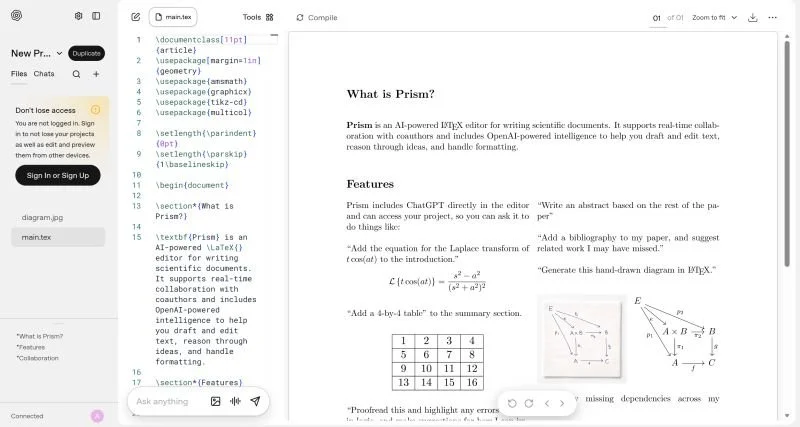
A little over a week later, they launched Prism, a free, collaborative, scientific research workspace based around integrating GPT-5.2 and available to anyone with a personal ChatGPT account.
Should those involved in scientific research in academia or industry be concerned that these form part of a common strategy?
The data privacy assurances for Prism are the same as for your personal ChatGPT account. If you opt out of model training (not the default) then your data won't be used for that purpose. But no other enterprise-level protections exist. There don't appear to be any separate, specific, terms for Prism beyond the ordinary ChatGPT terms.
The question is what happens during collaboration? You can easily share your workspace with others. But what isn't clear is whether or not the workspace creator's data settings apply to all collaborators, or if each new collaborator brings their own risk. If you invite someone without a ChatGPT account and their sign up for the purpose of using Prism, does the default permissiveness of OpenAI rights to their data now apply to the whole workspace?
One thing is clear. As AI providers struggle to turn eyes-on-product into dollars-in-pocket, coming up with creative (and perhaps justified) ways to monetize the value they deliver to users, we must be aware that data continues to be a vital currency. We must work to keep users informed of data risks, allowing them to drive value from these technologies without losing control of our ideas or outputs due to missing the small print in service terms.
First posted on Linkedin on 02/01/2025 -> View Linkedin Post Here